Beach Pools
Natural Stone & Pebble Finishes for Beach Pools
9 March 2026 · 7 min read
The surface you stand on, swim against and look at every day is what gives a beach pool its character. Natural stone pool finishes turn a body of water into something that reads as part of the landscape rather than a tiled box dropped into the garden. In Abu Dhabi, where sun, heat and salinity test every material, the finish you choose decides how the pool feels underfoot, how it ages, and how much it asks of you over the years.
Why the finish matters more than you think
On a conventional pool the finish is almost an afterthought, a layer of tile or plaster over a shell. On a natural beach pool the finish is the design. The gradual sandy entry, the soft water line and the colour of the shallows all come from the material itself. Get it right and the pool looks like a tidal edge that was always there; get it wrong and it reads as a swimming pool wearing a costume.
Three qualities matter most in our climate: grip when wet, comfort underfoot in full sun, and how gracefully the surface handles sunscreen, minerals and the occasional dust storm.
Natural stone pool finishes
Natural stone finishes use real cut or tumbled stone, set across the floor, the entry slope and the surrounding deck so the transition from land to water disappears. The appeal is honesty: every piece is slightly different, and the surface carries genuine depth rather than a printed pattern.
- Travertine stays remarkably cool underfoot and gives a pale, sandy tone that suits a beach entry. Tumbled and filled, it reads soft and natural.
- Quartzite and granite are denser and harder, ideal where you want a darker waterline or a more dramatic deep end that holds its colour.
- Sandstone brings warm desert tones but needs sealing to resist salt and staining in a Gulf garden.
The trade-off is that stone wants correct sealing and detailing. Done well, natural stone pool finishes age into something better looking with each year. Done cheaply, open joints and the wrong sealant invite efflorescence and staining.
Pebble and aggregate finishes
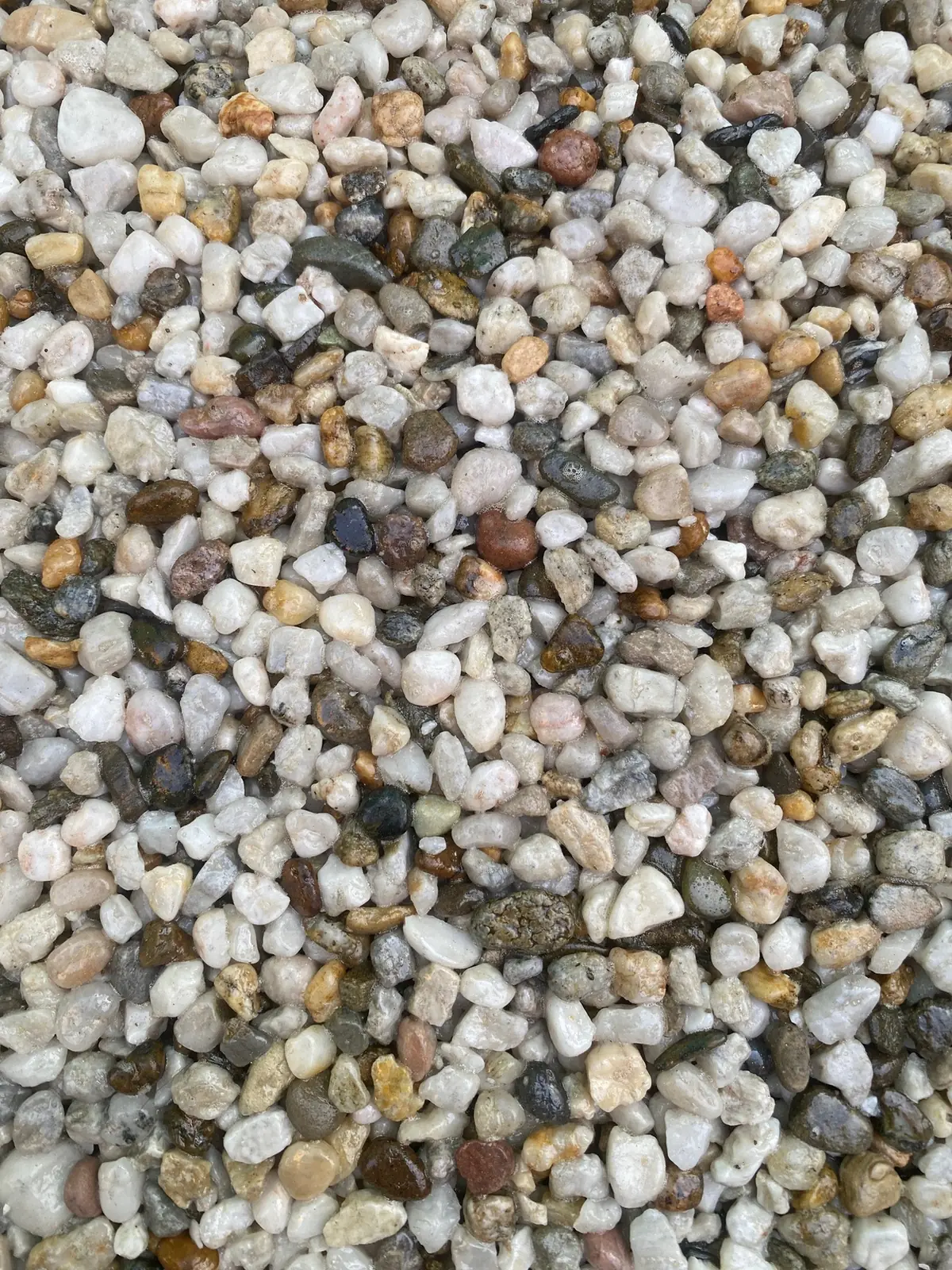
Pebble finishes blend small natural stones into a bonded surface that is then exposed and polished. They give the speckled, organic look people associate with a shoreline, and they wear extremely well underwater.
- Texture and grip: the gentle roughness is ideal for a sloped sandy entry where bare feet need confidence.
- Colour depth: pebble blends shift the water tone, from pale aqua over light mixes to deeper teal and green over darker stones.
- Durability: a well-applied pebble surface resists the wear that thin plaster shows within a few seasons.
Polished pebble feels smoother and is kinder to feet in seating zones, while exposed pebble offers more grip on slopes and steps. Many of our Abu Dhabi projects combine both, matching the texture to how each area is used.
Choosing for the Abu Dhabi climate
Material behaviour changes in our conditions. Dark surfaces look striking but absorb heat, so a deck that is beautiful in a brochure can be punishing at midday. Salinity in the air and groundwater attacks poor sealing, and fine dust settles into rough textures, so the finish has to balance looks with realistic cleaning.
Our guidance to homeowners is consistent: keep the shallow entry and any barefoot zones pale and cool, reserve darker stone for the deep end and waterline where it adds drama without burning feet, and always view large samples on site, in real sun, before committing. How a finish performs day to day links directly to the work covered in our beach pool maintenance guide.
Matching the finish to the entry
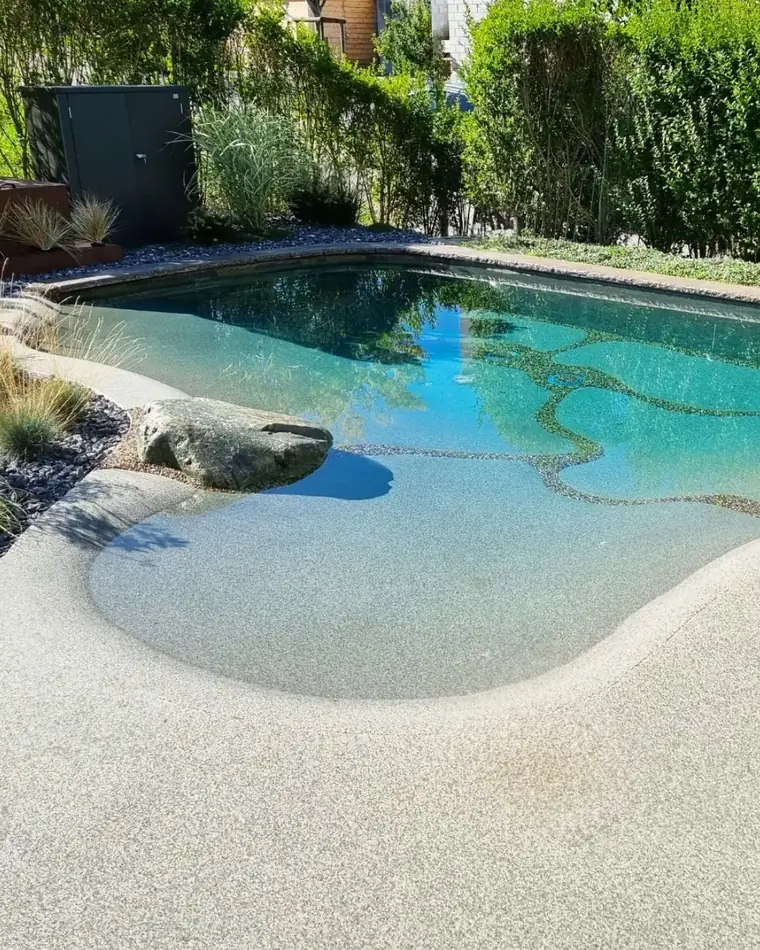
The finish and the entry geometry are one decision, not two. A flowing zero-edge entry asks for a continuous material that carries from dry deck into shallow water without a hard step or visual break. The colour transition across that slope is what convinces the eye it is a real beach. If you are still weighing the shape of that entry, our piece on zero-edge beach entry design is the natural companion to this one, and the two are best read together.
Getting the detail right
Quality lives in the joints, the slope and the sealing schedule, the parts no one notices until they fail. Edges should be eased so they are kind to feet, slopes set so water sheets evenly, and sealing chosen for salt resistance and reapplied on a sensible cycle. These are the details that separate a finish that looks good on handover from one that still looks good in five years.
If you are planning a beach pool and want to feel the difference between stone and pebble in person, we can bring samples to your villa and show you how each behaves in your own light. Start a conversation with our team and we will help you choose a finish that looks effortless and lasts.