Interiors
Choosing Materials & Finishes for Luxury Interiors
3 February 2026 · 7 min read
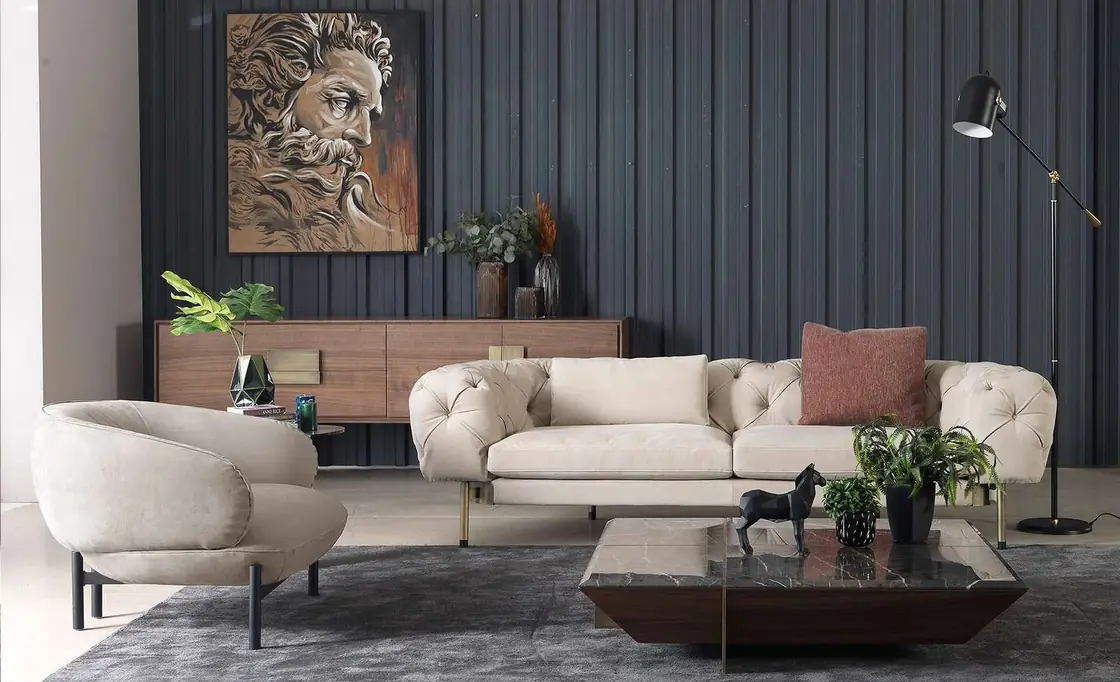
The difference between a room that merely looks expensive and one that feels genuinely considered almost always comes down to its surfaces. Choosing luxury interior materials is the quiet decision that shapes how a home ages, how it sounds underfoot, how light moves across a wall and how it feels to live in a decade from now. In Abu Dhabi, where heat, humidity and bright sun test every finish, that choice carries even more weight. This guide sets out how we think about materials and finishes, and how to select them so beauty and durability arrive together rather than at each other's expense.
Start with how a material feels, not just how it looks
A photograph flattens everything to colour and pattern, but in person a surface is texture, temperature and weight. Honed limestone is cool and matte; brushed oak is warm and tactile; polished plaster catches light in soft, shifting planes. We encourage clients to handle samples in the actual home, at different times of day, before committing. A finish that looks perfect in a showroom can read completely differently under the strong directional light of a Gulf afternoon.
The most enduring interiors tend to favour materials with natural depth, the kind that reveal more the closer you look. Veined stone, figured timber and hand-applied plaster have a quiet complexity that printed or moulded substitutes rarely match.
Choosing luxury interior materials for the Gulf climate
Selecting luxury interior materials in Abu Dhabi means designing for real conditions: intense sun through large windows, high humidity near the coast, and the constant cycle between fierce outdoor heat and cool conditioned air. These swings are hard on natural surfaces if they are chosen carelessly.
- Natural stone for floors and feature walls, selected for low porosity and sealed properly so it resists staining in kitchens and bathrooms.
- Solid and engineered timber rated for stability, since cheaper boards can cup or gap as humidity shifts.
- Polished and lime plasters that breathe, add depth to walls and avoid the flatness of standard paint.
- Metals such as brushed brass and blackened steel used as restrained accents, finished to resist tarnishing in humid air.
The same discipline we apply outdoors, where every surface must survive sun and salinity, carries indoors. It is the through-line in our wider thinking on luxury interiors: choose honest materials, then specify them correctly for the environment.
Build a restrained, coherent material palette
Luxury is rarely about quantity. A common mistake is to layer too many premium materials at once, so that marble, exotic timber, metal and glossy lacquer all compete. The most refined interiors usually rest on a small palette: one or two stones, one timber tone, a plaster, and a metal accent that recurs throughout the home. Repetition is what makes a space feel intentional rather than assembled.
We plan that palette alongside how rooms actually connect and flow, because materials read differently across an open layout than in closed rooms. That relationship between surface and spatial flow is something we explore further in our piece on space planning for open-plan living.
Match the finish to how the room is used
The same stone can be polished, honed or brushed, and each finish behaves differently. Polished surfaces are striking but show every scratch and water mark; honed and matte finishes hide wear and feel more relaxed underfoot. In a busy family kitchen we lean toward forgiving finishes; in a formal powder room a more dramatic, reflective surface can earn its place. Specifying the right finish, not just the right material, is where many projects quietly succeed or fail.
Think about how materials will age
Some materials look their best on day one and decline from there; the finest ones improve. Natural stone develops a soft patina, brass mellows, timber deepens in tone. We deliberately choose surfaces that age with grace, so the home looks better after years of living rather than tired. This long view is part of our broader belief that good design works in harmony with nature rather than against it, indoors as much as out.
Coordinate materials early, not at the end
Material decisions ripple into joinery details, lighting, plumbing and budget, so we resolve them early in the design rather than treating them as a final flourish. Choosing a heavy stone slab changes the substructure; a hand-troweled plaster changes the construction sequence. Bringing these choices forward keeps the project calm and the result coherent.
Choosing materials well is one of the most rewarding parts of designing a home, and one of the easiest to get wrong without guidance. If you are planning a new interior or a renovation in Abu Dhabi and want a palette that is both beautiful and built to last, start a conversation with us and we will help you choose finishes that feel right for years to come.