Interiors
Space Planning for Open-Plan Living
10 December 2025 · 6 min read
The open-plan home promises light, sociability and a sense of space — but only when it is planned with care. Good space planning for open-plan living is what separates a generous, calm interior from a cavernous room where conversation echoes and nobody quite knows where to sit. In Gulf villas and larger apartments, where kitchen, dining and lounge often share one volume, the planning decisions made early on shape how the home feels every single day. Here is how we approach it.
Start with how the space will be lived in
Before a single piece of furniture is chosen, we map how the household actually moves through the day — where breakfast happens, where children do homework, where guests gather, how the majlis relates to the family lounge. Strong space planning for open-plan living begins with these patterns, not with a furniture catalogue. Understanding the rhythm of the home tells you where the natural zones want to be and how much room each one truly needs. This research-led mindset runs through everything we do, as described in our note on the design process from research to application.
Defining zones without walls
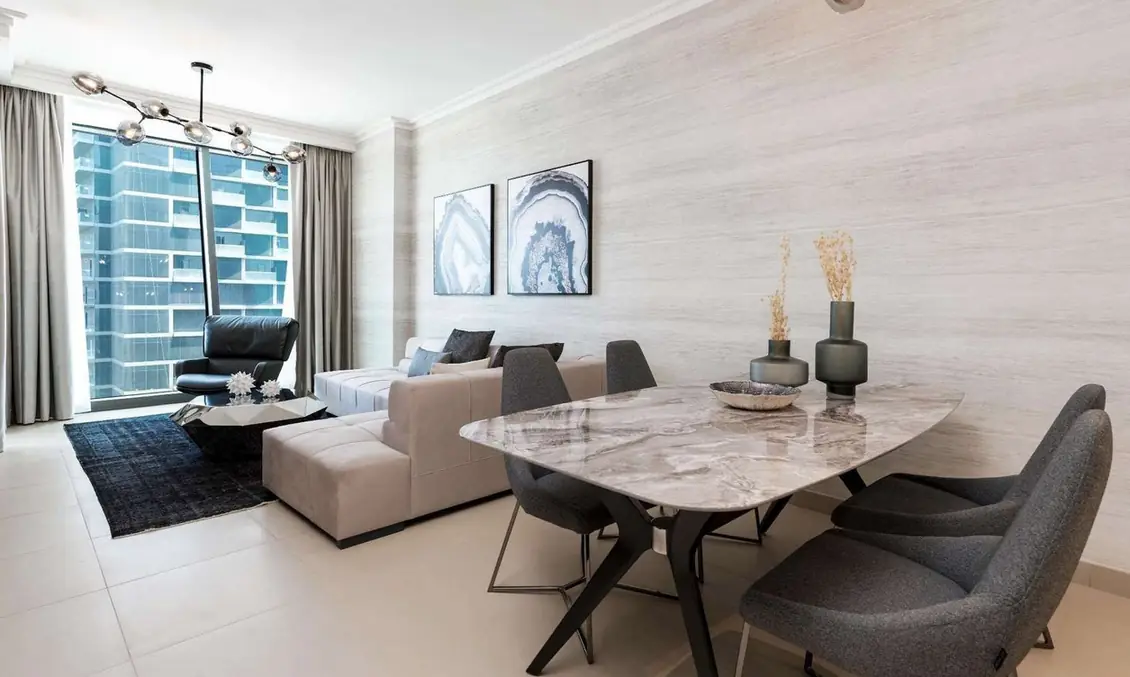
The art of open-plan is creating distinct areas that still read as one space. Rather than partitions, we use subtler tools: a change in ceiling height, a large rug to anchor the seating, a shift in flooring, a run of joinery, or a feature light suspended over the dining table. Each device tells the eye where one zone ends and another begins. Done well, you can stand in the lounge and feel held in a defined room, even though the kitchen is a few steps away and entirely open to view. Low furniture and open shelving can mark a boundary while still letting light and sightlines flow through, and a console behind the sofa neatly separates the living zone from a circulation path without ever closing the space down.
Circulation: protect the paths people walk
One of the most common open-plan mistakes is furniture that blocks natural movement. We plan clear circulation routes first — generous paths from the entrance to the kitchen, from the dining table to the terrace doors, around the seating group — and only then place the furniture. As a rule of thumb, main walkways want around 90 to 120 centimetres of clear width so two people can pass comfortably. When circulation is respected, a busy family home stays calm even at its busiest moments.
Anchoring the furniture layout
In a large open volume, furniture pushed against the walls leaves a hollow, uncomfortable middle. Instead we float the seating inward, grouping sofas and chairs around a clear focal point so conversation feels intimate. The dining table is positioned to relate to both the kitchen and the view, and the kitchen island often becomes the social hinge between cooking and gathering. Scale matters enormously here: undersized pieces look lost, so larger rooms reward generous, well-proportioned furniture. We also leave deliberate breathing room around each grouping so the eye can read the zones clearly, and we keep the backs of sofas and consoles tidy, since in an open plan there is rarely a wall to hide them against.
Acoustics, light and the senses
Open spaces with hard floors and large glazing — common in Gulf homes — can become loud and bright. We soften them with rugs, upholstered pieces, curtains and acoustic-friendly materials that absorb sound and tame harsh midday light. Lighting is planned zone by zone so each area can be set independently; the kitchen bright and functional while the lounge stays warm and low. Because lighting carries so much of the mood in an open plan, it deserves its own attention — our home lighting plan guide covers how to layer it well.
Connecting indoors to outdoors
The best open-plan homes in Abu Dhabi do not stop at the glass. Aligning the indoor zones with the terrace, garden or pool beyond extends the sense of space and draws the eye outside. When the dining area opens directly onto a shaded outdoor lounge, the two become one continuous entertaining space for much of the year. Thinking about this relationship early, alongside your landscape and outdoor design, makes the whole property feel larger and more cohesive.
Open-plan living rewards planning more than almost any other layout. Get the zones, circulation and proportions right, and the result is a home that feels both expansive and intimate. If you are designing a new interior or rethinking an existing one, we would be glad to help you plan it properly. Tell us about your space and let's begin.